
Counseling Services
EMDR
EMDR is a technique for healing from traumatic events by making memories feel less vivid and allowing the body to let go of stored defenses that no longer serve you. Calmed clinicians have a reverence for this work and EMDR gives them a powerful tool to help you move forward in your healing process.
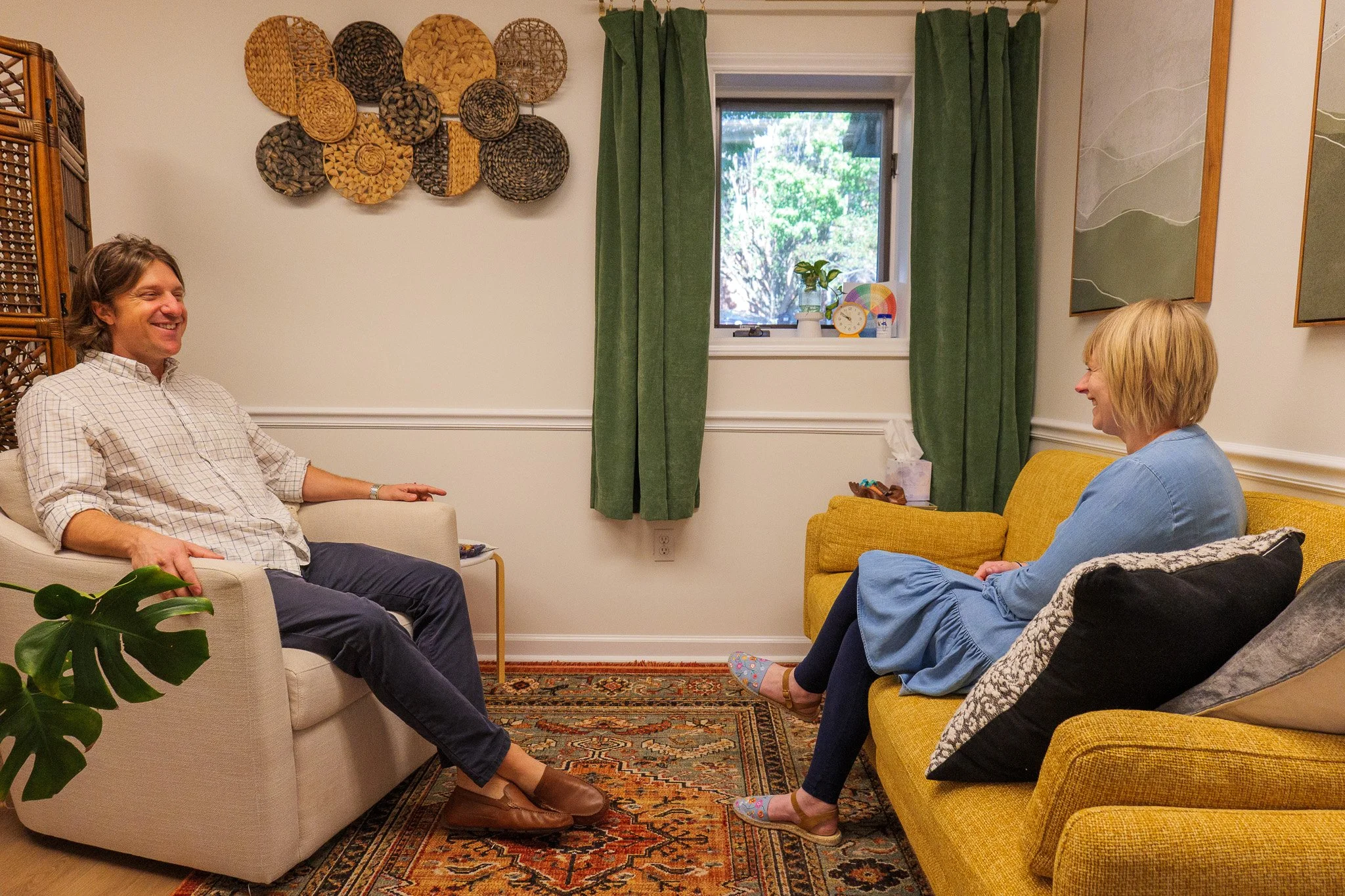
Talk Therapy
At Calmed Counseling, our talk therapy approach is grounded in evidence-based methods tailored to meet you where you are. We draw from CBT to help shift unhelpful thought patterns, DBT to support emotional regulation and healthier relationships, and ACT to build flexibility and break cycles of feeling stuck. We also use IFS to gently explore inner conflict and heal from past experiences, IPT to strengthen how you connect with others, and compassionate grief counseling to support you through loss and life transitions.
Couples Therapy
Denise (Gottman Method): Focuses on research-based interventions to improve relationship dynamics. Her approach emphasizes building emotional safety, friendship, and practical communication skills to foster deeper mutual understanding.
Courtney (In Vivo Training): Gained intensive, hands-on experience at Virginia Tech’s Marriage and Family Therapy Center. She utilizes an eclectic, adaptable approach tailored to the unique needs of each couple, backed by direct clinical supervision.

Perinatal Therapy
Kendra, and Stacey are certified perinatal mental health professionals who provide holistic, individualized care for people navigating the transition from pregnancy through the first two years postpartum. This specialized support addresses the complex hormonal, physical, and identity shifts that occur during this window, while also helping clients manage the intense community pressures surrounding "perfect" parenting.
Their approach recognizes that perinatal health often extends beyond the birthing person to include partners, who may struggle with their own mental health disorders or require guidance on how to effectively support the family’s bonding and overall well-being.